Best Books on Taoism
There are hundreds of books on Taoism in English, and most of them will waste your time. This list skips the filler and focuses on books that actually reward reading — organized by where you are, not by what sells. Each entry includes an honest note on what the book genuinely offers and which reader it serves best.
Start Here: For Beginners

Tao Te Ching
Mitchell takes liberties with the original Chinese — he works from existing translations rather than the source text — but he captures the spirit of the Tao Te Ching better than almost anyone. The language is clean, contemporary, and unexpectedly powerful. For most readers coming to Taoism for the first time, this is the right place to start.
Best for: a first encounter with the Tao Te Ching.
Skip if: you want a literal translation from the Chinese — Mitchell works from existing translations, not the source.

The Tao of Pooh
Uses Winnie-the-Pooh to explain Wu Wei and Pu — the uncarved block — and does it with genuine philosophical clarity. It looks like a light read, but the ideas it conveys are substantive and accurate. Particularly good for readers who are skeptical of philosophy books or who want to see Taoist concepts demonstrated rather than argued.
Best for: readers who are skeptical of philosophy books, or who want the ideas demonstrated rather than argued.
Skip if: you want academic depth — this is an introduction, not a study.
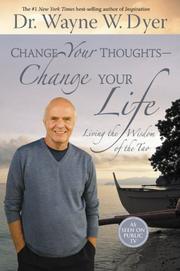
Change Your Thoughts — Change Your Life
One chapter per verse of the Tao Te Ching, each focused on practical application to modern life. The tone is more self-help than the other books on this list, and Dyer is not a scholar — but the book is accessible, consistent, and genuinely useful for readers who want to understand how the Tao Te Ching might apply to daily decisions and attitudes. A good companion to Mitchell's translation rather than a replacement for it.
Best for: daily devotional reading and applying the Tao Te Ching to specific life questions.
Skip if: self-help framing puts you off — Dyer leans that direction.
Going Deeper

Tao: The Watercourse Way
Watts' final and most comprehensive treatment of Taoism, left unfinished at his death. It covers the philosophy with greater depth and precision than his earlier work, moving through the nature of the Tao, wu wei, and the Chinese world-view with care and sustained intelligence. Essential reading for anyone who has worked through the introductory material and wants a writer who truly understood what he was describing.
Best for: readers who've finished an introductory book and want the most careful Western treatment of the philosophy.
Skip if: you want a complete book — Watts died before finishing it.

365 Tao: Daily Meditations
One page per day, grounded in actual Taoist practice tradition rather than Western interpretation. Deng Ming-Dao writes from within a living tradition, and it shows — the entries feel different from most Western Taoism books. Excellent for readers who want to build a daily rhythm of engagement with the philosophy rather than reading it cover-to-cover once and setting it aside.
Best for: building a daily rhythm of engagement with Taoist ideas across a year.
Skip if: you want a single-sitting read with a sustained argument.
The Primary Texts

Tao Te Ching
Le Guin read the Tao Te Ching as philosophical anarchism and her translation reflects that — literary, unexpected, and often more illuminating than conventionally scholarly versions. She works from multiple existing translations and is transparent about her choices. Worth reading alongside Mitchell's version rather than instead of it; the two translators bring out different facets of a genuinely difficult text.
Best for: readers who already have one Tao Te Ching and want a second, more literary perspective.
Skip if: this is your first translation — Mitchell or Lau is more conventional starting ground.

Lao-tzu's Taoteching
Red Pine works close to the Chinese and surrounds each chapter with selections from across two thousand years of Chinese commentary on the Tao Te Ching. The result is denser and less polished than Mitchell, but readers who have lived with a popular translation for a while and want to know what the text actually carries — and what the tradition has argued it means — should read this next.
Best for: a reader who wants the closest English to the Chinese, with two thousand years of commentary alongside.
Skip if: you want a smooth literary read — Red Pine is denser and slower than Mitchell or Le Guin.

Tao Te Ching
The most poetically restrained scholarly TTC in print. Addiss and Lombardo work from the Chinese with minimal interpretive smoothing, producing a translation that is austere on the page but rewards rereading. Each chapter is presented with the Chinese characters opposite the English, which makes the philological choices visible to non-Chinese readers.
Best for: a reader who wants scholarly rigour with poetic restraint, and likes seeing the Chinese opposite the English.
Skip if: you want extensive footnotes or a discursive commentary tradition — this is the text, plainly presented.

Tao Te Ching
The canonical academic English Daodejing. Lau's translation has been the scholarly reference point for over half a century, and it remains the version most often cited in academic writing on early Daoism. Conservative, careful, and precise; the introduction is a useful short orientation to the textual problems the book poses.
Best for: the canonical academic English Tao Te Ching — the version most often cited in scholarly writing.
Skip if: you want the most accessible first encounter — Mitchell or Le Guin is friendlier ground.

The Complete Works of Zhuangzi
The standard scholarly translation, and also genuinely readable — Watson manages to preserve Zhuangzi's humor and strangeness rather than flattening them. The Zhuangzi is essential for anyone serious about understanding Taoism beyond the Tao Te Ching; it is weirder, funnier, and in some ways more practically instructive than Laozi's text. The butterfly dream, Cook Ding, and the death of Hundun are all here.
Best for: anyone serious about Taoism beyond just the Tao Te Ching — Zhuangzi is half the philosophy.
Skip if: you want extensive chapter-by-chapter commentary — Watson's introduction is excellent but there is no per-chapter scholarly apparatus.

Zhuangzi: The Essential Writings with Selections from Traditional Commentaries
Ziporyn's selection of the most philosophically important passages, each surrounded by selections from two thousand years of Chinese commentary. The best way for an English reader to inhabit how the Zhuangzi has actually been read in the tradition that knew it best — rather than encountering it as a stand-alone text without context.
Best for: readers who have read Watson once and want a deeper, commentary-rich second pass.
Skip if: you want the complete Zhuangzi — Ziporyn picks the central passages rather than translating every chapter.

Chuang-tzŭ: The Inner Chapters
Graham's focus is the Inner Chapters (1–7), which on his reading are the only ones likely to be Zhuangzi himself; his edition includes selections from the outer and miscellaneous chapters too, grouped by his account of their likely authorship. The result is the most philosophically rigorous English Zhuangzi — Graham's introduction and his analytical readings of each chapter are themselves a short course in early Chinese philosophy.
Best for: a philosophy reader who wants the Inner Chapters read with full rigour, and accepts an edition organised by Graham's compositional hypothesis rather than the traditional chapter order.
Skip if: you want a straightforward complete-text edition — Graham reorganises and selects rather than presenting all 33 chapters in their received sequence.

The Book of Chuang Tzu
Palmer's complete Zhuangzi is the smoothest modern English version — the prose flows naturally and the parables read like the stories they are. Less scholarly than Watson or Ziporyn, less philosophically dense than Graham, but the right choice for a reader who wants to read the whole book without doing translation-comparison work.
Best for: a reader who wants the complete Zhuangzi in smooth, modern, readable English.
Skip if: you want commentary or scholarly apparatus — Palmer is text only.
Taoism Applied: Work and Leadership
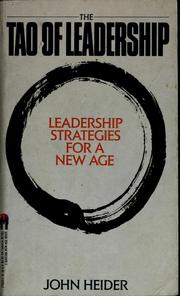
The Tao of Leadership
Heider rewrites each chapter of the Tao Te Ching as a direct address to a group facilitator or leader, and it works better than the concept suggests. The book is used in leadership training programs worldwide and holds up because the underlying ideas — acting without dominating, creating conditions for others to flourish, knowing when to step back — are genuinely drawn from the text. Not a substitute for reading the Tao Te Ching itself, but a useful bridge between the philosophy and daily professional life.
Best for: managers, facilitators, and group leaders looking to apply the Tao Te Ching to their work.
Skip if: you want primary Taoist philosophy — this is a deliberate rewrite, not a translation.
Practice

The Way of Energy
The single most useful first Qigong book in English. Lam Kam Chuen teaches Zhan Zhuang — standing meditation — through clear photographs and the kind of patient explanation that beginners actually need. The book is the closest a printed text can come to substituting for a teacher, while being honest that it can't fully replace one.
Best for: a first encounter with Qigong from a respected teacher in the Zhan Zhuang tradition.
Skip if: you want a survey of styles — this focuses on one core practice.

The Art of Chi Kung
A broad sweep — Wong covers the history of Chinese energy practices, several styles of qigong, medical theory, and martial applications. Less focused than Lam Kam Chuen, but the right next book if you want to know where what you're learning sits in the wider tradition of qigong, taiji, and related practices.
Best for: a broader sweep of Chinese energy practices, history, and theory.
Skip if: you want one single focused method — Wong covers many.
If you want a side-by-side comparison rather than a single recommendation: Choosing a Tao Te Ching translation · Choosing a Zhuangzi translation.